Calligraphy & Hand Lettering
Letters made slowly.
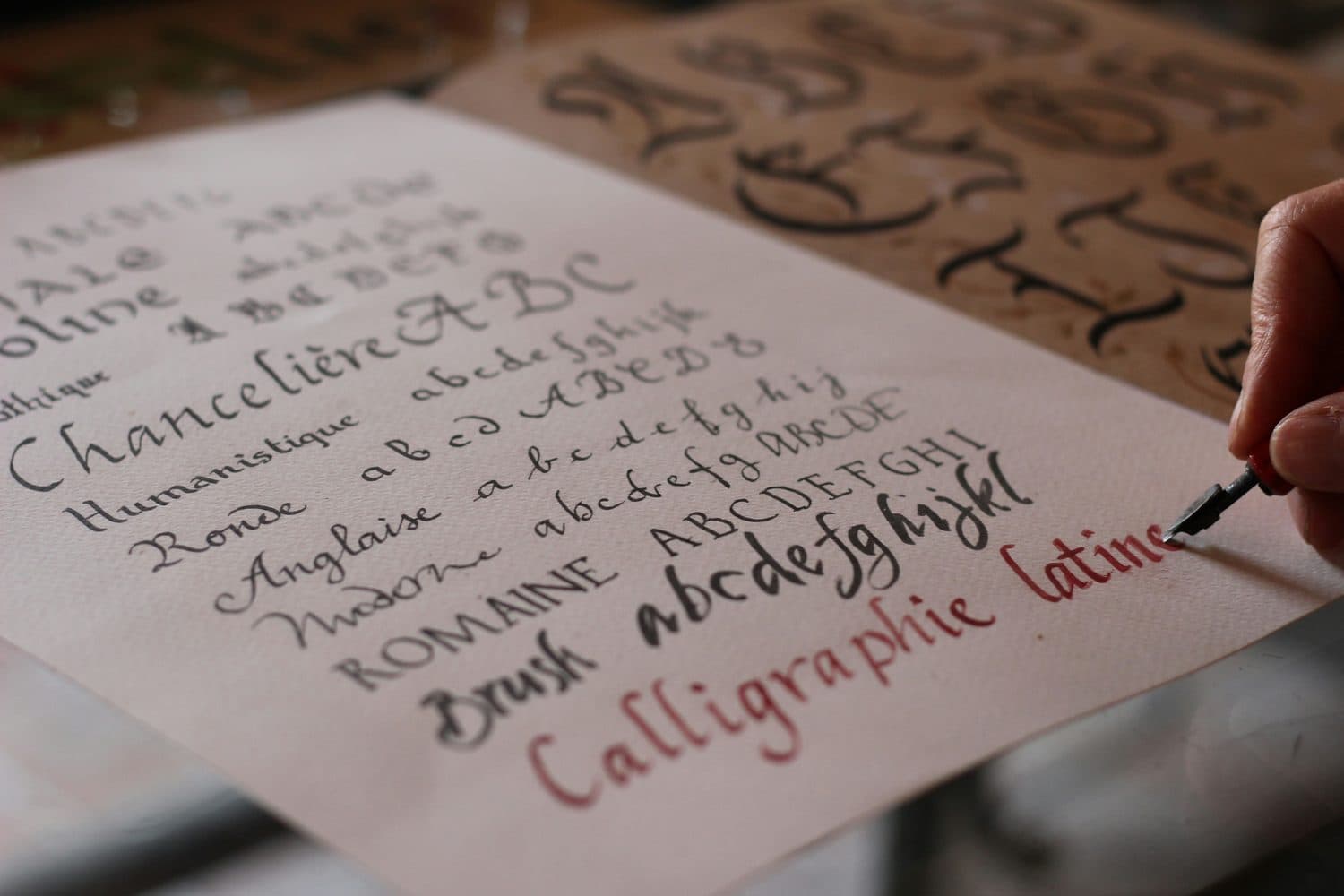
Calligraphy is letter-forming as a craft. There are several traditions: Western pointed pen, broad-edge italic, brush calligraphy, modern hand-lettering. Each has its own tools and conventions.
It rewards repetition. The same letter, drawn the same way, until your hand knows the shape. Most beginners practice with a basic pointed pen and bottled ink before committing to a tradition.
Progress is visible but slow. Early practice barely looks like calligraphy. With repetition, the letters start to look like the example. The early stages can be discouraging if you expect quick results.
You’ll love calligraphy & hand lettering if…
- you want a hobby that fits in a tote bag
- you'd actually use better-looking hand lettering in your life
- repetitive practice helps you settle
What you'll need to get started
Modern Calligraphy Kit for Beginners
This kit comes with a spiral-bound book as well as pens, pencils, and other accessories. It's a great place to start!
Mont Marte Calligraphy Set
This set includes calligraphy pens, nibs, ink cartridges, and an instruction and exercise booklet. A great addition to your kit!
If you like this, also try
Not sure which hobby fits you?
Take the quiz